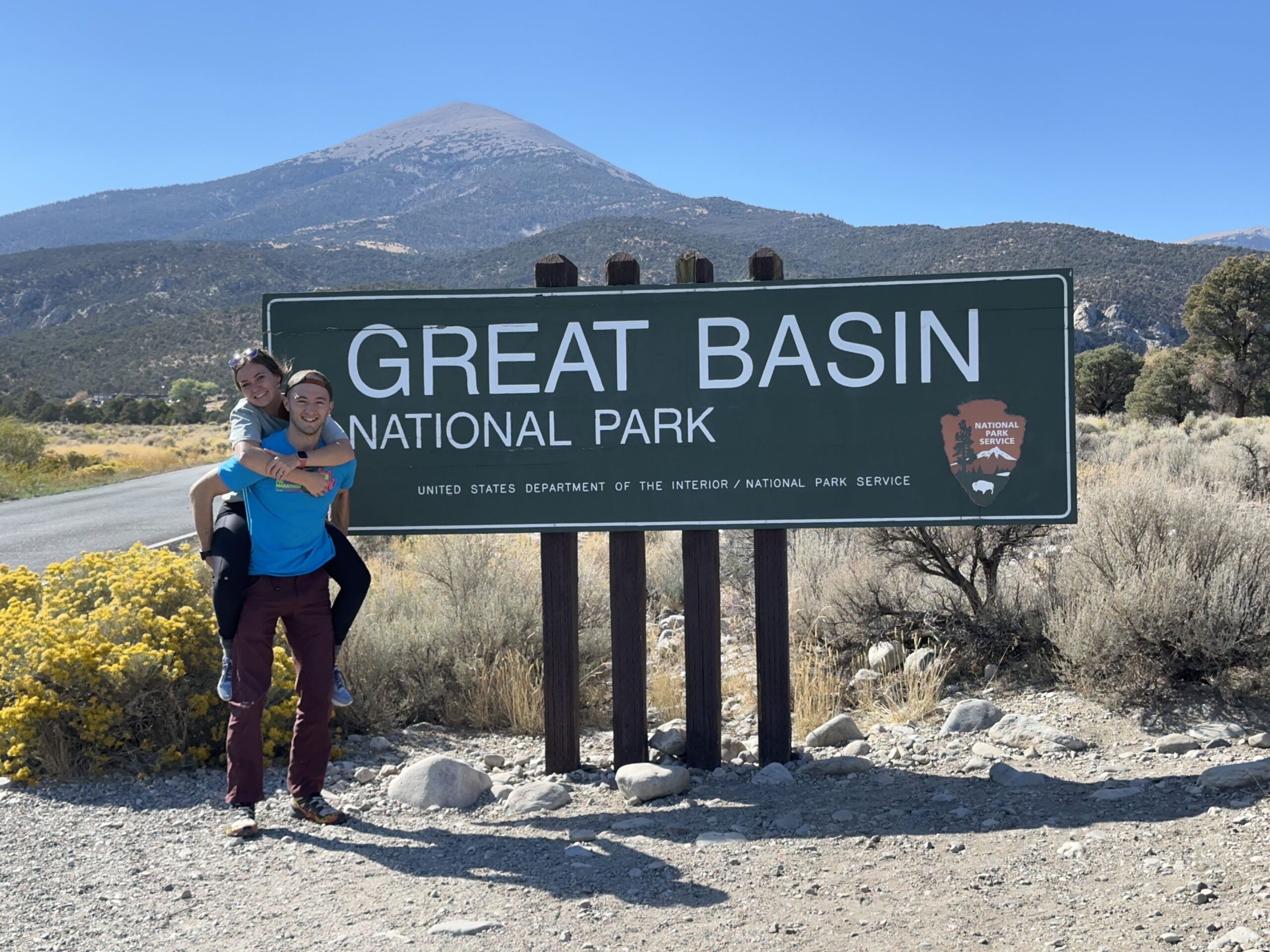
Near the eastern border of Nevada, a mountainous paradise rises above the desolate desert. Here, the tallest mountain for hundreds of miles towers over a peaceful sea of pine trees and aspen trees. Small lakes dot the landscape. Groves of bristlecone pine trees, some of the oldest living trees in the world, thrive on the slopes of the Snake Range mountains. Mule deer, elk, bighorn sheep, mountain lions, and marmots roam the landscape. The only glacier left in Nevada quietly carves a gulley into the side of Wheeler Peak. Once the sun sets, the Milky Way illuminates the endless forests and hills. Bats exit the caverns of Lehman Caves to search for food. This paradise is known today as Great Basin National Park, and it’s my pick for America’s most underrated national park.

If you haven’t heard of Great Basin, you’re not alone. Since 2014, less than 155,000 people have visited this remote national park annually. This is a fraction of the millions of annual visitors that flock to nearby parks in Utah or even Nevada’s own Death Valley. If what I described above sounds like something you’d find in Colorado, Utah, Wyoming, or California, then you might wonder why more people don’t venture out to this stunning abundance of natural wonders?
To this day, Great Basin has been one of my favorite national parks I’ve visited. The dense concentration of activities, the fascinating geology, flora, & fauna, and the spectacular night sky created an experience that I will never forget. The stark lack of crowds in the park – coupled with its commendable qualities – have since led me to declare that Great Basin is the most underrated national park in the United States. If you need more convincing to visit the park, continue reading!
What Is Great Basin National Park?
Great Basin National Park is a small national park near the remote eastern border of Nevada. At about 77,000 acres in area, it’s similar in size to Arches or Mammoth Cave. As mentioned, the park sees very few visitors annually… typically landing it in the bottom 5 of parks in the contiguous 48 states. We’ll talk more about the lack of visitors in a minute.

The park derives its name from the region in which it resides, known as the “Great Basin.” This region is endorheic, meaning that no water in the region drains into an ocean. All water within the Great Basin is self-contained. The Great Basin region is also home to Death Valley, Salt Lake City, Lake Tahoe, and Joshua Tree. The national park protects part of the Snake Range, a small mountain range that is part of the Basin and Range province. The Basin and Range province is exactly what is sounds like: a large region composed of arid valleys broken up by narrow mountain ranges. This province includes Death Valley & Big Bend, which exhibit similar topography.
Check out my guide to Great Basin National Park
Great Basin National Park is a sky island. Since the mountains within the park rise so dramatically above the surrounding desert, they exhibit a starkly different environment. Within the national park, you can find pine forests, lakes, streams, and wildlife. In the lower elevations surrounding the park, an arid desert with little wildlife dominates the landscape. This can create a sense of “whiplash” within the park, as you can often see the surrounding desert while hiking amongst pine trees. The park’s visitor center, located in Baker, NV, sits around 5,300 feet of elevation, situated in the desert. Meanwhile, Wheeler Peak towers in the distance at over 13,000 feet tall.

Why Do So Few People Visit Great Basin?
Great Basin National Park sounds pretty great, right? Then why does nobody visit the park?
The easiest explanation is that Great Basin is in the middle of nowhere. The closest major cities to the park are Salt Lake City – a 3.5-hour drive – and Las Vegas – a 4.5-hour drive. Baker, NV, is the town closest to the national park, and it’s home to only 40 people. Garrison, UT, is also nearby and is home to about 80 people. There are minimal services around the park. You’ll find some motels in the park’s vicinity, a couple of gas stations, some small markets, but that’s it.

Great Basin’s remoteness and lack of infrastructure is the easiest explanation for the small number of visitors that venture to the park every year. Another possible reason? The park lacks the “oomph” that other parks in the region exhibit. There aren’t many colorful vistas, there’s not as many hikes, there aren’t massive herds of elk or bison roaming the landscape. Overall, there isn’t as much to do as its bigger, more flashy neighbors in the vicinity. I think this explains the minimal interest in the park and the absence of tourist infrastructure. Due to the minimal number of visitors to Great Basin, the type of resort town associated with popular national parks (like Estes Park, Moab, or Furnace Creek) is nowhere to be found.

Compared to its neighbors in Utah and Death Valley, Great Basin National Park feels empty. It’s surprisingly easy to find a campsite amongst the park’s five campgrounds. Parking lots rarely fill up. Trails don’t see much foot traffic. It’s normally easy to get a ticket for a tour at Lehman Caves. The park is quiet at night.
What Makes Great Basin So Underrated?
If it’s not clear at this point, I love Great Basin National Park. There is so much to enjoy and appreciate in this park, crammed into one small package. It’s not pretentious and it requires a particular aptitude for nature to enjoy at its fullest. Continue reading for my reasons why Great Basin is the most underrated national park.

Great Basin’s Hikes Are Challenging & Memorable
If you enjoy a challenging trail, Great Basin won’t disappoint you. The park contains a plethora of hikes that range in difficulty. Looking for an easy hike amongst forest and wildlife? Check out the ancient bristlecone pine grove. Interested in an all-day mountain summit? Look to Wheeler Peak. Want to get even deeper into the backcountry and enjoy an all-day excursion where you’re unlikely to encounter another soul? Great Basin’s got you covered.

See the list below for some of the park’s best hikes, listed in order of distance.
- Lehman Caves Nature Walk (0.4 miles, 39 feet elev. gain): This short, paved walk near the Lehman Caves visitor center is a nice introduction to Great Basin.
- Alpine Lakes Loop (2.6 miles, 475 feet elev. gain): This loop is a great way to experience the nature and scenery around Wheeler Peak without climbing to the summit.
- Strawberry Creek (4.1 miles, 1,282 feet elev. gain): For even more solitude from people, the out-and-back jaunt to Strawberry Creek is a good way to enjoy the forests on the slopes of Wheeler Peak.
- Bristlecone Pine Grove & Wheeler Peak Glacier (4.6 miles): The bristlecone pine grove near Wheeler Peak is one of the most interesting attractions in the park. Reaching the grove is 2.8 miles out and back, and continuing to see the glacier adds almost 2 miles, round trip.
- Lexington Arch (5.2 miles, 1,263 feet elev. gain): Hard to reach but rewarding if you do, the limestone Lexington Arch is a unique geologic feature in Great Basin’s remote southern region.
- Wheeler Peak summit (8.5 miles, 2,906 feet elev. gain): The climb to Wheeler Peak’s summit is an incredible way to experience Great Basin. Read more on this hike further down.
- Baker Lake (11 miles, 2,627 feet elev. gain): The largest lake in the park can be accessed by this long trail that follows Baker Creek.
- Baker Creek, Johnson Lake, Timber Creek loop (12.4 miles, 3,717 feet elev. gain): If you want to turn the previous hike into a rewarding loop with additional sights, consider this longer variation.
The Scenic Drive is Jaw-Dropping
Beginning near Lehman Caves Visitor Center and snaking its way up to the campground below Wheeler Peak, Great Basin’s scenic drive is one of the best in the National Park Service. The road climbs over 4,000 feet and passes several stunning vistas and points of interest.

Shortly after beginning the drive, you will parallel Lehman Creek and pass two campgrounds. As you climb, you’ll catch endless views of the desert below the park through breaks in the pine trees. Further up, you’ll pass the Mather Overlook and then the Wheeler Peak Overlook. The road continues to climb until it reaches the Wheeler Peak trailhead, finally terminating at Wheeler Peak Campground.

Most of the park’s most popular hikes are accessed via the scenic drive, so it’s likely you will drive this at some point during your visit. Still, I’d recommend taking the time to enjoy the drive around sunrise or sunset. The colors in the park and the hues on the horizon create a surreal experience unlike any other.
Summiting Wheeler Peak Is a Blast
Great Basin National Park also contains one of the most underrated mountain summits… Wheeler Peak. It’s one of the most incredible peaks I’ve climbed, to date, and was relatively easy for the reward.


Wheeler Peak is the highest point in Great Basin. The peak is the second highest point in Nevada, and the 12th most prominent and most topographically isolated in the United States. In non-geological terms, this means that the peak feels tall compared to the lowlands around it. On a clear day, the summit offers views over 50 miles in every direction.

The climb up Wheeler Peak is an 8.5-mile round trip journey with 3,000 feet of elevation gain. It’s a nontechnical hike with a long, steep section through a field of scree. It tops out at just over 13,000 feet of elevation. If you don’t do well at high altitudes, you may struggle on this hike. Otherwise, it’s an attainable climb for anyone with good fitness and hiking experience. Watch for wildlife, enjoy the views of the desert once you climb above the pine forest, and soak in the vistas at the summit!
Great Basin Has One of the Darkest Night Skies Anywhere
Since Great Basin is so far from any population center, its night sky is one of the darkest and clearest in the United States. It’s, therefore, a designated Dark Sky Park. If you enjoy stargazing or love to hike under the glow of the Milky Way, this national park is the place to do it. The overlooks along the scenic drive are an excellent place to set up a camera and nab some photos of the night sky.

The NPS offers frequent ranger-led night sky programs at Great Basin Visitor Center. Those in attendance can look at distant constellations using state-of-the-art telescopes owned by the park service. The rangers that lead these programs are knowledgeable about deep space and always excited to answer your questions.
Lehman Caves, the Park’s Original Attraction
Before Great Basin was a national park, it was protected as Lehman Caves National Monument. To many, Lehman Caves is the central feature of the park, and the NPS offers ranger-led tours of the famous caves.


Lehman Caves is 2 miles long, making it the longest known cave in Nevada. The cave has a fascinating natural & human history and is home to many species. Decorations in the cave are spectacular, especially the abundant cave shields that are rare in other caves. If you’re interested in checking out Lehman Caves when you visit Great Basin, be sure to nab a ticket on Recreation.gov before you arrive!
Some of the Oldest Trees in the World Live in Great Basin
Yes, the oldest trees in the world… you heard me right. The Great Basin bristlecone pine is found throughout the entire Great Basin region, but this species is especially abundant within the national park. These trees can reach ages thousands of years old, making them the oldest non-clonal organisms on the planet. The wonky-looking tree species is easy to pick out in the park and can be found at higher elevations, especially around Wheeler Peak. They exhibit a gnarled appearance and reddish bark.

Bristlecone pines can be found throughout Great Basin, and several concentrated groves exist around the park. The most well-known grove – near Wheeler Peak – can be accessed via a 2.8-mile hike. During our first visit to Great Basin in 2024, Maria & I photographed many of these trees as we trekked to the top of Wheeler Peak. Keep an eye out for them while in the park!


Fun Fact: The oldest non-clonal organism ever recorded was a resident of Great Basin National Park, before it was cut down by a graduate student. The tree, known as “Prometheus,” was a bristlecone pine dated approximately 5,000 years old. It lived near the tree line on the slopes of Wheeler Peak. Since the tree was cut down, the next oldest tree identified – as of 2025 – is Methuselah, a bristlecone pine that lives in the White Mountains of California.
Wildlife Abounds in the Sky Island
Great Basin National Park is a sky island, meaning that the environment in the high-elevation park is much different than the harsh desert that surrounds it. Its humid continental climate is conducive for wildlife to thrive, and thrive it does!

Many large mammal species call Great Basin home. Deer, bighorn sheep, elk, bobcats, mountain lions, and marmots are some of the animals that live in the park. Birds are common as well, making the park a birdwatcher’s paradise. Watch for wildlife while you drive and keep an eye out while you hike.
Crowds Are Nonexistent
Did I mention that very few people visit Great Basin every year? Here’s your reminder. For me, it’s the greatest factor that makes Great Basin such an underrated national park.

Those who enjoy the isolation and serenity found in nature will absolutely love Great Basin. You won’t find the long lines, busy trails, crowded overlooks, traffic jams, or obnoxious tourists that plague other national parks. It’s much easier, therefore, to find available campsites, book tours for Lehman Caves, or grab a parking spot at trailheads. When you’re on the trail, it often feels like it’s just you and the forest… and nobody else!
The Only Glacier in Nevada Clings to Life in Great Basin
The only glacier in Nevada, and one of the southernmost glaciers in the United States, clings to the slopes below Wheeler Peak. Though it’s only ~2 acres large as of 2025, it is still hanging onto existence, shrinking at a smaller rate than other glaciers. It could disappear as early as 2041. Read more about this glacier on the NPS’s website.
It’s possible to spot this glacier from the top of Wheeler Peak, but you can get a better look at it from below. If you’re hiking to the bristlecone pine grove near the peak, continue on the trail for another ~mile to spot the glacier. From the trailhead at the end of Wheeler Peak Scenic Drive, it’s a 4.6-mile round-trip hike to see the glacier (2.8-miles if just visiting the bristlecone pine grove).
Getting Around in Great Basin
Great Basin is a small national park, so it’s relatively easy to plan a trip there and get around once in the park. There are two visitor centers: Great Basin Visitor Center in Baker, NV, outside the park, and Lehman Caves Visitor Center, which sits at the intersection of the park’s attractions.
Lehman Caves, Wheeler Peak Scenic Drive & Baker Creek
This area is the “hub” of Great Basin National Park. Lehman Caves Visitor Center is where tours for Lehman Caves depart. The start of Wheeler Peak Scenic Drive is nearby, as is the road to Baker Creek. Most of the park’s popular hikes are accessed along the scenic drive.

The only paved roads in the park are the entrance road leading to Lehman Caves and the Wheeler Peak Scenic Drive. The road to Baker Creek is a packed gravel road – accessible with most vehicles – that necessitates slower driving. Baker Creek hosts two campgrounds and a handful of all-day hikes into the mountains.
Snake Creek & Lexington Creek
Snake Creek is a quiet area of Great Basin National Park located south of the Lehman Caves area. Getting here requires exiting the park to the east, driving south, and re-entering the park on an unpaved road. The road to Snake Creek hosts some backcountry campsites and the hike to Johnson Lake.
The Lexington Creek area is home to Lexington Arch, a well-known hike in the park that is difficult to reach despite its recognizability. This area is even further south than Snake Creek. To get here, you must drive southeast from the park’s main entrance – back into Utah – and re-enter the park using a rough, unpaved road that requires an AWD, high-clearance vehicle. Only attempt to drive here and hike here if you are prepared, as this area is remote with poor cell coverage. You will likely be unable to call for help if you get stuck out here, or injured.
Strawberry Creek
This seldom-visited area in the northern part of Great Basin is accessible by an unpaved road that enters the park through the north border. The Strawberry Creek region hosts a couple of hiking trails and a scenic viewpoint. Hiking here gives visitors a chance to explore the park’s forests and see wildflowers.

Getting to Great Basin
Isolation is largely what makes Great Basin the most underrated national park. Getting to the park, therefore, can feel like quite the journey.
Fortunately, the park is easy to reach by car, it just requires some patience to get there. The park does not charge an entry fee… rangers often say that you “pay for your entrance with gas.” If visiting from afar, I’d recommend flying into Salt Lake City, which is 3.5 hours by car from the park. There are plenty of places on the way to the park – outside SLC – to stock up on gas, food, & water. Be sure to come prepared with all of these items, since gas near the park is pricey and food marts are sparse.

Las Vegas is another reliable city to fly into to access Great Basin National Park. It sits 4.5 hours from the park, an hour further than SLC.
When visiting Great Basin, consider pairing the trip with other national parks. Death Valley is 5.5 hours from the park, Zion is 3.5 hours, and Bryce Canyon is 3 hours. If you spend a week in the area, that gives you plenty of time to enjoy both Great Basin and other parks in the region.
Where to Stay Around Great Basin
Despite its remoteness, there are a surprising number of places to stay at Great Basin. The park hosts five developed campgrounds, detailed in the table below. All of these campgrounds have sites that can be reserved through Recreation.gov. There are numerous primitive campsites in the park as well, primarily along Snake Creek. Backcountry camping in the park is permitted as long as you have a free permit in hand.
| Campground | Notes |
|---|---|
| Lower Lehman Creek | 9 sites. Located along Wheeler Peak Scenic Drive. |
| Upper Lehman Creek | 23 sites. Located along Wheeler Peak Scenic Drive. |
| Wheeler Peak | 37 sites. Located at the trailhead for hikes in the Wheeler Peak area. |
| Baker Creek | 37 sites. Accessible via gravel road. Near Lehman Caves Visitor Center. |
| Grey Cliffs | 16 sites, including group campsites. Near Lehman Caves Visitor Center. |
Note: Dispersed camping is allowed outside the park as that land is managed by the Bureau of Land Management.

If you don’t want to camp, there are a couple of lodging options near the park. Whispering Elms Motel & RV Park is a small establishment in Baker, NV. Further from the park, on the border with Utah, Border Inn Casino offers motel rooms, as well. Hidden Canyon Retreat is even further off the beaten path, but more tucked away into the mountains. Any of these locations around Great Basin offer easy access to America’s most underrated national park.
Great Basin National Park Map
The map below provides an overview of the park’s attractions, trailheads, and activities described above.
Other Underrated National Parks
Though Great Basin is my pick for the most underrated national park, there are several others that I considered writing about. Of the 39 parks I’ve visited so far, here are a few of my other contenders for the title of “most underrated park”! Click the park’s name to view my guide page for that park.
- Channel Islands National Park: This cluster of islands off the coast of Los Angeles sees a mere 200-300,000 visitors every year. The park houses a plethora of exciting hikes, diverse wildlife on land and in the sea, kayaking opportunities, and vistas of the Pacific Ocean.
- North Cascades National Park: Though plenty of people visit Ross Lake – a national recreation area that bisects the park – every year, less than 50,000 people make the effort to journey into North Cascades “proper.” North Cascades houses over half of the glaciers remaining in the lower 48 states exist. It’s also home to some breathtaking hikes and mountains that look like they were plucked from Switzerland.
- Everglades National Park: Many park enthusiasts look down upon Everglades due to its lack of sweeping vistas or epic hikes. What it lacks in “wow factor,” it makes up for with its huge wildlife population (including hundreds of bird species) and endless kayaking paths.
- Dry Tortugas National Park: This small park – 99% of which is underwater – lies 70 miles from Florida’s Key West… which explains why less than 90,000 people visit the park every year. Those who make the journey (by boat or plane) to Dry Tortugas will discover a tropical paradise with colorful sea life, stunning blue waters, and a penchant for historical anecdotes.
Tips for Visiting Great Basin
If it’s your first time trekking to Great Basin National Park, consider the following tips to maximize your visit.
- Come prepared with food, water, and a car topped off with gas. It’s good to be prepared with all three of these items, as the selection around Great Basin is sparse and tends to be more pricey. Try to top off on gas when you’re ~2 hours outside the park.
- If you’re looking for the best time to visit Great Basin, visit in early October! This is when the aspen trees in the park typically change color, adding to the park’s vibrant color palette. Otherwise, Great Basin’s peak season begins in late May and continues through October. During these months, the park is fully open and largely free of snow.
- Budget 2 or 3 days to fully enjoy the park. If you’re going to take the time to drive so far into the middle of nowhere, you may as well make your visit worthwhile! With 2 days in Great Basin, you can adequately explore the Lehman Caves & Wheeler Peak areas, including the scenic drive. With an extra day, you can venture out to one of the park’s more remote areas, like Lexington Creek or Strawberry Creek.
- Keep an eye out for mountain lions. While it’s unlikely you’ll encounter this elusive big cat, be aware of the possibility. Make lots of noise on the trail if hiking near or during the dark, and having bear spray handy isn’t a bad idea.
- Book campsites and cave tours before your visit. Though it’s always a possibility that you can grab a last-minute reservation at Great Basin, I’d still recommend securing bookings in advance. That way, you’re not venturing out into the wilderness with uncertainty as to where you’re staying!
In Conclusion…
“Great Basin is America’s most underrated national park.” This is an opinion that I’ll stand by until another park proves me otherwise. It still shocks me that such a pristine mountain wilderness sees so few visitors every year.

Initially, I hesitated to write this article. The biggest factor that makes Great Basin such an underrated national park is the lack of visitors. So, if I start telling everyone how underrated Great Basin is and tell them they should visit, doesn’t that risk what made the park special in the first place? Perhaps. But, this park is so remote with such a distinct lack of infrastructure, that I doubt anything I say will spur droves of tourists to suddenly appear. Instead, I hope this article appeals to those looking for an adventure off the beaten path. That nature enthusiasts who love the peace, serenity, and beauty found in the wilderness – who may not have otherwise heard of Great Basin – get an idea for their next camping trip.
If you choose to visit Great Basin National Park, please do so with respect. Help maintain the peace & quiet that makes the park so special. Leave no trace and take nothing with you except the memories made on the trails or under the night sky. Keep Great Basin an underrated national park. If the park leaves an impression on you – like it did for me – share your favorite part of your visit with me! Safe travels, and happy trails.
— Paul