Death Valley National Park is the hottest, driest, and lowest place in North America. If that sounds like the worst place to visit for a vacation… hear me out! Once you look past Death Valley as a barren desert, you’ll discover a vibrant and storied landscape shaped by millions of years of geologic activity. Volcanic remnants, traces of human activity, towering mountain ranges, slot canyons, and endless vistas define this vast national park. Consequently, there are lots of interesting things to do in Death Valley.
Death Valley’s barren landscape hosts a surprising variety of activities. In addition to hikes, scenic drives, and colorful overlooks, the park features three resorts, one of the darkest night skies in the country, many slot canyons, challenging mountain summits, and fascinating wildlife.

Many visitors to Death Valley barely scratch the surface of the park’s offerings. I’m here to encourage you to dig a little deeper.
Read on for my personal list of the best things to do in Death Valley National Park. I’ll also talk about places to stay, the best times of year to visit, nearby activities, and general tips for a successful trip.
Plan your trip to Death Valley National Park
1. Visit Badwater Basin
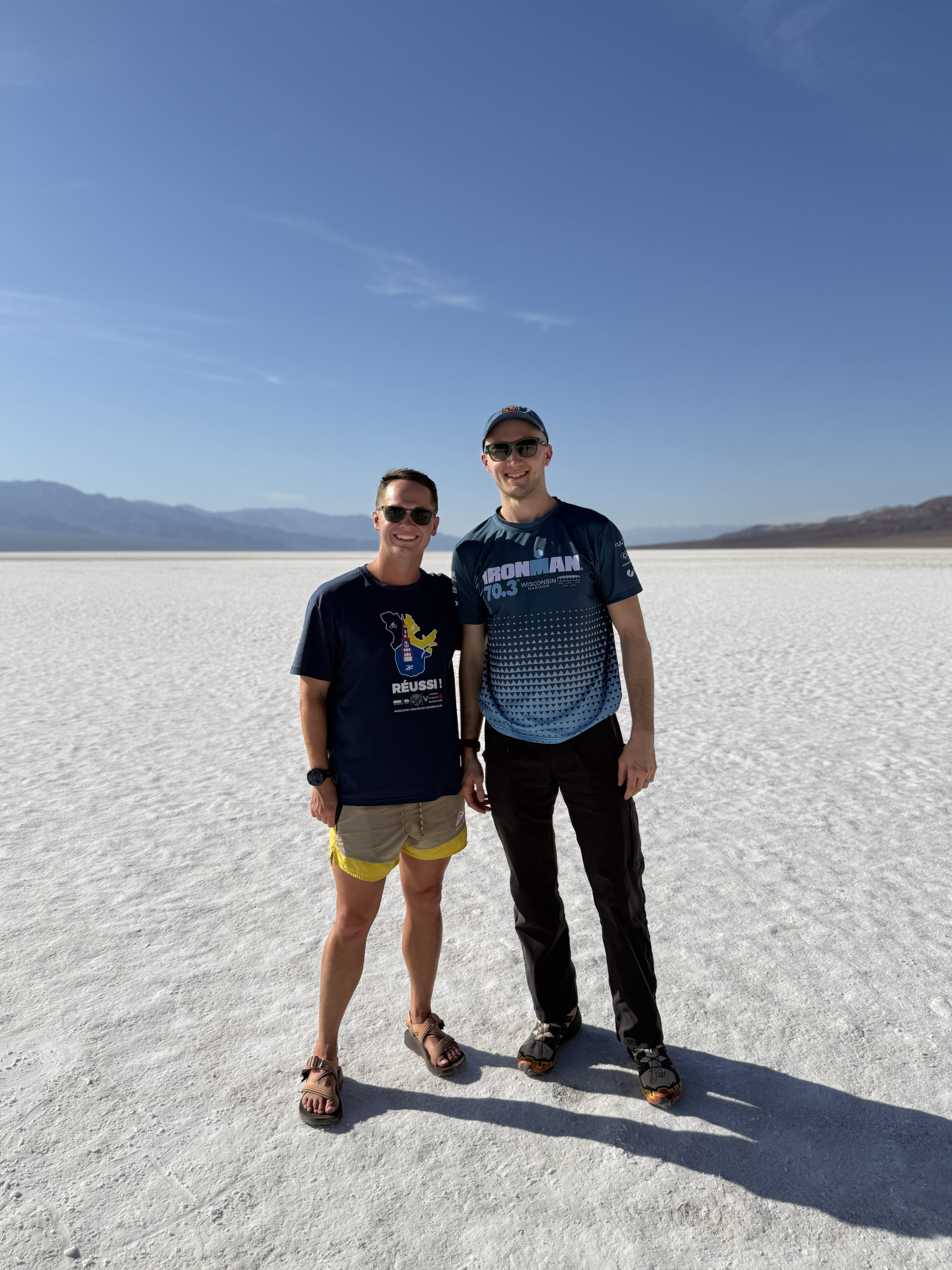
Badwater Basin is the lowest point in North America, 282 feet below sea level. Here, a seemingly endless salt flat – remnants of an ancient lake – stretches for miles between the Panamint & Amargosa Ranges. The basin is a marvel to behold, and fascinating due to the lack of life or distinguishing features across its surface. As the lowest point on the continent, stopping at Badwater Basin a popular thing to do in Death Valley.

Though most people only spend a few minutes at Badwater Basin, it’s worth a stop. Standing hundreds of feet below sea level is a surreal experience. There’s even a “SEA LEVEL” sign high up on the cliffs above the parking lot to give you a sense of how low you actually are. Trekking across the salt flat is equally surreal as you spin around and gaze at the towering mountains around you. Look in the distance for Telescope Peak… its summit clocks in at 11,043′, two miles above you.
The drive to Badwater Basin is scenic and brings you past several points of interest. In addition to Artists Palette – more on that later – the road passes Devils Golf Course and Natural Bridge Canyon. The former offers an amusing diversion to see some wonky-looking salt formations. The latter offers an opportunity to complete a short hike to an arch made of a rocky alluvial deposit… much different than the natural arches seen in nearby Utah.


Be wary of the summer heat if you visit Badwater Basin. Don’t spend more than ~15 minutes exploring the salt flat if the temperature is near or over 100°F. Carry plenty of water with you.
2. Gaze at Zabriskie Point

Zabriskie Point is another top attraction in Death Valley National Park, and for good reason. This drive-up overlook provides a birds-eye view of otherworldly badlands known as the Furnace Creek Formation. These colorful badlands formed from sediments left behind by an ancient lake, combined with volcanic activity and tectonic uplift. You can read more about its geologic history on Wikipedia.
At Zabriskie Point, a short paved path from the parking lot guides visitors to a perch atop a ridge that overlooks the badlands and canyons below. Formations like Manly Beacon and Red Cathedral are easy to spot, as well as the distant Panamint Range. You can spend as long or as little as you want here, or embark on a hike into the maze below. Read the next section about Golden Canyon for more about hikes in this area.

Sunrise and sunset are popular times to visit Zabriskie Point. It’s also a great spot for stargazing, and visiting at nighttime can allow you to dodge crowds present during peak hours.
Zabriskie Point is named for the former vice president of the Pacific Coast Borax Company, an important part of Death Valley’s history. Other attractions in the park tied to the company’s legacy include Harmony Borax Works and Twenty Mule Team Canyon.
3. Hike through Golden Canyon

Walking into Golden Canyon is one of the most popular things to do in Death Valley. As its name implies, Golden Canyon sports brilliant yellow canyon walls that you have to see firsthand to believe. The hike guides visitors to Red Cathedral, another formation named for its colorful walls.


Most visitors to Golden Canyon complete a short, 1-to-2 mile out-and-back trek. This trek leaves from a trailhead along Badwater Road. The maze of badlands and canyons in the Furnace Creek Formation host a variety of longer hikes, too. See the below list for some of the possible hike variations in this area…
- Golden Canyon (0.8 miles, 118 feet of elevation gain): This is the shortest, easiest hike in Golden Canyon. You don’t have to walk far to see the canyon’s namesake yellow walls.
- Golden Canyon to Red Cathedral (2.9 miles, 567 feet of elevation gain): Reaching Red Cathedral requires some scrambling through a slot canyon. The extra effort is worth it.
- Golden Canyon & Gower Gulch Loop (4.2 miles, 692 feet of elevation gain): Creating a loop with Gower Gulch allows you to see colorful, green & purple canyon walls.
- Golden Canyon & Gower Gulch Loop plus Zabriskie Point (6.4 miles, 1,069 feet of elevation gain): This variation can depart from Zabriskie Point or the Badwater Road trailhead. It offers a great perspective of the badlands near Zabriskie Point. Consider adding a mile to see Red Cathedral up close.
- Badlands Loop (2.6 miles, 406 feet of elevation gain): This hike leaves from Zabriskie Point and explores the nearby badlands.
Since Golden Canyon is close in proximity to Zabriskie Point, Badwater Basin, Furnace Creek, and Artists Palette, it’s easy to pair a hike here with other interesting things to do in Death Valley.

4. Watch Sunrise at Dante’s View
To watch the sun rise, or to watch it set? Dante’s View is a great spot to witness either of these events, but I’m choosing to highlight the sunrise.

Dante’s View – an overlook in the Black Mountains of the Amargosa Range – rises over a mile above Badwater Basin. A well-paved road guides visitors directly to this stunning overlook, which is a 35-minute drive from Furnace Creek. From here, it feels like you can see endlessly in every direction… almost 100 miles, to be exact. On the clearest days, the Sierra Nevada range and Mount Whitney are visible to the west. Other features – like the Snake Range, Panamint Range, and Furnace Creek – are clearly visible from here.

At sunrise, the colors at Dante’s View look like something out of a painting. A pink and purple sky to the west gradually gives way to a brilliant blue, and – as the sun climbs over the horizon – the shadows of the Amargosa Range over Badwater Basin slowly recede. Come with a chair, snacks, and some patience as you enjoy the serenity of the overlook.
If you want an adventure, Dante’s View serves as the trailhead for two hikes. A shorter option is to descend the ridge to a nearby overlook (1 mile, 219 feet of elevation gain). For a longer hike, you can traverse Dante’s Ridge to the north to summit Mount Perry (8.8 miles, 2,089 feet of elevation gain).

5. Drive through Artists Palette
Artists Palette is a spectacular display of natural colors at the base of badlands in the Amargosa Range. Yes, they are as colorful as their name implies, and more colorful than photos can capture. Volcanic deposits rich in compounds like iron oxide and chlorite created these colors. The vibrant colors here look different as the sun moves across the sky, creating an appeal to visit almost any time of day.

There are several parking areas from which to explore Artists Palette. Visitors are encouraged to see these colorful formations up close and on foot – a rarity for national parks. Just watch your step, as there are no maintained trails here.
Artists Palette is the final stop along Artists Drive Scenic Loop, a 9-mile drive through scenic landscapes. Take your time to enjoy the stops along this drive and soak in the twists & dips of the road as it snakes through canyons, badlands, and washes.
6. Climb the Mesquite Flat Sand Dunes
Dune fields are abundant in Death Valley National Park thanks to the quantity of ancient, dried-up lakebeds within the park. Mesquite Flat hosts the most popular, easily-accessible of these dunes, just off CA-190 about 25 minutes north of Furnace Creek.

The Mesquite Flat Sand Dunes are an excellent place to spend 15 minutes or 2 hours, depending on how much exploration you want to do. The tallest dunes in the field can be reached by a 2-mile round trip hike with ~500 feet of climbing. If you don’t want to trek that far, there are plenty of smaller, shorter dunes to climb near the parking lot.


While you should certainly add these dunes to your list of things to do in Death Valley, take note of potential hazards. High winds – common in the valley – can kick up sand that gets into your eyes and nose. In the heat of summer, the surface temperature of the sand can reach as high as 200°F. Don’t hike on the sand dunes past 10AM in the summer months.
7. Descend into Ubehebe Crater

2,000 years ago, volcanic explosions created a series of craters at the north end of Death Valley. The deepest of these – Ubehebe Crater – has become a major draw for visitors to the park. Most people who drive to Ubehebe choose to stay on the rim, looking down into the crater’s depths. If you’re feeling ambitious or looking for an exciting challenge, you should consider getting a closer look at the crater’s volcanic past…
The 500-foot descent into the crater is exhilarating. Since the paths into the crater are formed by ash and pumice, you can practically leap and bound into the crater’s depths as the terrain offers a soft landing for every step. The view at the bottom of Ubehebe Crater is fascinating, offering a close-up perspective of volcanic rock that rises steeply around you.


The climb out of the crater is certainly less fun than the descent, but it’s still a rewarding challenge. I’ll emphasize the word “challenge” here, as you shouldn’t attempt the descent unless you have high confidence in your fitness level. Every step out of the crater feels like a slog, as the ash and pumice create a “two steps forward one step backward” effect. Once you escape the crater, however, it makes the traverse around the rim feel earned and helps you appreciate the landscape even more.
Ubehebe Crater is an hour’s drive from Furnace Creek. Even if you don’t plan to descend into the crater, it’s still worth the drive simply to see it up close and explore the rim. While you’re there, be sure to visit Ubehebe’s more petite neighbor, Little Hebe.
8. Enjoy the Night Sky
Death Valley is one of the darkest places in North America. Period. With a Gold Tier designation from DarkSky International, it’s a great place to watch the stars.
Stargazing is a popular activity in Death Valley thanks to its exceptionally dark sky. It’s easy to find a quiet spot at night in the park to set down a telescope, camera, and chair to enjoy the heavens above. Consider the following spots to enjoy the night sky:
- Dante’s View
- Zabriskie Point
- Ubehebe Crater
Death Valley National Park hosts an annual Dark Sky Festival for astronomy enthusiasts. Check it out if you have a passion for studying the stars!
9. Summit Telescope Peak
Peak baggers, rejoice! Telescope Peak is the highest point in Death Valley, and hiking to the summit is an exciting prospect. Its summit – at over 11,000 feet in elevation – rises more than 2 miles above Badwater Basin next door to the peak. The prominence of the peak is dramatic, offering sweeping views with a 50+ mile radius. On a clear day, you can easily see the Sierra Nevada mountains and Mount Whitney piercing the sky.

Reaching Telescope Peak is no cakewalk. Driving to the trailhead takes 90 minutes from Furnace Creek, and the last few miles of the road can be rough on 2WD vehicles. The hike itself is over 12 miles long with 3000 feet of elevation gain, which will put the average hiker’s fitness to the test. It is also “at altitude,” which can create an extra challenge for people not acclimated to high elevations.
Due to the altitude, Telescope Peak is much cooler than the surrounding park and is covered in snow for much of the year. The best times to summit the peak, therefore, are from late April until October. Bring ice spikes if you’re visiting in the fringe season where snow still exists on the trail.

Despite its challenges, the hike to Telescope Peak should be on every visitor’s list in Death Valley. On the hike, look for ancient bristlecone pine trees and desert bighorn sheep. You can camp near Telescope Peak at Mahogany Flat and Thorndike campgrounds. Both of these campgrounds provide access to another nearby peak: Wildrose Peak. Be sure to check out Charcoal Kilns while you’re in the area.
10. Trek to Darwin Falls

Darwin Falls is a hidden world in Death Valley that few visitors acknowledge. This 18-foot waterfall is one of few year-round falls in Death Valley National Park. Tucked in the back of a desolate canyon, the water here creates an abundance of life and greenery that stands in sharp contrast to the rest of Death Valley. It’s a beautiful, serene place that reminds me of nature’s gentle provisions in a harsh world.
Visitors could previously access Darwin Falls via an easy 2-mile hike. However, recent flash floods washed away the gravel road that leads to the trailhead. As of 2025, this road is still impassable, which forces those who want to see these falls to embark on a 7-mile hike.


Though most of this 7-mile hike is arid and surrounded by uninteresting landscapes, the reward at Darwin Falls is worth the trek. Please respect the waterfall by not swimming or bathing in it, as the nearby town of Panamint Springs relies on the water from the oasis.
11. Relax at the Oasis
Did you know there is a resort in Furnace Creek, over 100 feet below sea level where it hardly ever rains? Before I visited Death Valley, I had NO idea. Named The Oasis at Death Valley, this posh resort offers an escape from the heat and dryness of the park.


The Oasis offers lodging ranging from cheap(er) motel rooms at The Ranch to luxury rooms The Inn up the road. But for those just passing through, there is plenty to see and do here. The resort offers the following:
- A swimming pool & showers
- Restaurant
- Saloon
- Ice cream parlor
- Tennis & basketball courts
- General store & souvenir shop
- Horseback riding
- A golf course
Conveniently, the Oasis is a stone’s throw from Furnace Creek Campground, so it offers a pleasant escape to anyone camping in the heat. Visitors not lodging at the Oasis can pay $14/person/day (as of 2025) to use their public facilities, including the pool and showers. Stovepipe Wells Village offers a similar perk, though their resort is smaller and less lavish.

12. Journey to the Racetrack
The Racetrack is a famous landmark in Death Valley’s remote backcountry. Known for its mysterious “sliding stones” – which appear to move slowly across an arid playa – it’s become a destination for photographers and adventurous tourists. Contrary to its popularity, it is exceedingly difficult to access.

To reach the Racetrack, the NPS recommends taking a high-clearance, 4×4 vehicle with spare tires. They DO NOT RECOMMEND using a conventional rental car, as the chances of damaging the car, puncturing a tire, and stranding yourself is high. Rough, unmaintained roads with sharp rocks, uneven terrain, and large holes lead the way to the Racetrack. You must navigate these rough roads for over 25 miles each way to get there. You can read more about the recommended route to the Racetrack on the NPS website. There is no cell phone service, no services, and no water in this remote valley, so come prepared. Farabee’s Jeep Rentals – at Furnace Creek – offers rentals of Jeep Wranglers that are equipped to handle the backcountry.
Though the journey to the Racetrack is arduous, it’s immensely rewarding. The remote valley offers serenity and peaceful nature without many other people. At the Racetrack, you can spend the night in the nearby Homestake Dry Camp. While you’re there, consider embarking on the hike to Ubehebe Peak.
13. Explore a Slot Canyon
Slot canyons are abundant in Death Valley, and many of them are easily accessible via hiking trails or drives. Some of the most popular include:
- Mosaic Canyon: Probably the most popular slot canyon in Death Valley, Mosaic Canyon is near Stovepipe Wells Village. To reach the trailhead, you’ll have to drive on a gravel road that is typically passable in sedans. The hike guides you through a canyon with intricate features and towering walls.
- Fall Canyon: This is a quieter canyon that visitors pass on the way to or from Ubehebe. The hike into Fall Canyon starts traversing a sun-exposed wash before entering a narrowing canyon with massive walls.
- Sidewinder Canyon: Another lesser-visited slot canyon, Sidewinder Canyon resides south of Badwater. The hike through this canyon isn’t well-marked, so be prepared to route-find a little bit.
- Titus Canyon: The road through Titus Canyon offers some of the most dramatic views in Death Valley. Navigating this road requires a 4×4 vehicle with high clearance.
- Natural Bridge Canyon: A short hike from this trailhead near Badwater takes visitors to the fascinating Natural Bridge formation. It’s a natural arch, but looks unlike most of the arches in the desert Southwest.
- Twenty Mule Team Canyon: This drivable canyon near Zabriskie Point is typically accessible by most cars, though the road is unpaved. If you’re looking for something to explore that requires zero hiking, consider driving this canyon.


14. Visit Scotty’s Castle
Visiting Scotty’s Castle is one of the overlooked things to do in Death Valley National Park. This ranch (not technically a “castle”) resides high in the Grapevine Mountains near Ubehebe Crater. Built during the Roaring Twenties and named for gold prospector Walter E. Scott, the structure captures a sliver of history from the early 1900’s.
A visit to Scotty’s Castle can be a fun diversion from hiking in the hot sun at Death Valley. As of 2025, the castle is not open to the public due to damage from a flood in 2015 and fire in 2021. But, you can still visit the castle as part of a ranger-led tour. These tours are offered from December through March.
15. Cycle Through the Park
Death Valley National Park offers several exciting routes for experienced cyclists to conquer. The park’s paved roadways are perfect for road cycling… they are long, open, and well-maintained, making for enjoyable bike rides.
If you’re an adventurous and strong cyclist, consider the following rides in Death Valley:
- Furnace Creek to Badwater Basin: 18 miles, 742 feet of elevation gain (one way)
- Artists Drive: 9 miles, 1,500 feet of elevation gain (point to point)
- Towne Pass Climb (Stovepipe Wells Village to Panamint Springs): 30.5 miles, 5,339 feet of elevation gain (one way)
- Hells Gate & Daylight Pass Climb (Furnace Creek to Beatty): 40 miles, 5,000 feet of elevation gain (one way)
As with most activities in Death Valley, it’s important to be prepared for the heat. If you’re embarking on a long bike ride, bring plenty of water, nutrition, and an emergency radio. Don’t embark on a bike ride past 10AM in the summer months.
16. Spot Pupfish at Ash Meadows
Devils Hole is a detached, often-overlooked unit of Death Valley National Park that exists outside the main park. It resides within Ash Meadows National Wildlife Refuge, about 50 minutes from Furnace Creek. Ash Meadows is an oasis featuring natural springs that are home to unique species of desert creatures, including pupfish.
The Devils Hole pupfish is a species that exists only in Devils Hole, a geothermal pool inside a limestone cavern. This unique fish once only numbered in the dozens, but now numbers in the hundreds thanks to conservation efforts. You can see these fish through binoculars from a viewing platform above Devils Hole, which has a tiny surface area. The pool itself extends far below the surface, and the connecting caves in the pool have yet to be mapped.
If you’re interested in seeing Devils Hole, consider spending time in the rest of Ash Meadows. At a minimum, I’d suggest checking out Crystal Springs, the most vibrant of the springs in the refuge.
17. Experience a Wildflower Bloom
Catching a wildflower bloom in Death Valley can be tricky but is incredible if you’re successful. Wildflowers commonly bloom in small clusters in Death Valley throughout the spring. Though widespread blooms – called “superblooms” – are uncommon, it’s typical to find at least some wildflowers early in the year. At low elevations, this happens between February & April. At high elevations, this can occur as late as July.
About once a decade, the park experiences a rare superbloom. These only occur when conditions are perfect, and are not the norm. Those conditions include: well-timed rain, warm weather, and a lack of windstorms.
Visit the NPS website for more background on wildflower blooms and tips to catch a good bloom year.
18. Kayak on Lake Manly
Let me be VERY clear: kayaking is something that can rarely be done in Death Valley. However, Lake Manly – the remnants of which created Badwater Basin – occasionally “refills” after heavy rainfall. The phenomenon is temporary and short-lived, but it happens every few years. Most recently, this occurred in early 2024 when the lake was kayak-able for 2 weeks.
If your lifestyle or location offers you the flexibility to visit Death Valley on a whim, pay attention to regular news releases from the park. Kayaking on Lake Manly is truly a once-in-a-lifetime experience, and if you can take advantage of the opportunity, do it! Maybe I’ll see you out on the temporary lake.
Getting Around in Death Valley National Park
Death Valley National Park is the size of Connecticut, which can sound daunting for a first-time visitor. Fortunately, the park features a simple, no-nonsense road network that is easy to navigate. CA-190 is the primary highway that runs through the park. Several major roads branch off of it, leading visitors to most of the park’s main attractions. These include: Badwater Road, Dante’s View Road, Daylight Pass Road, Scotty’s Castle Road, Emigrant Canyon Road, and Panamint Valley Road.
The below map is from the National Park Service’s website and clearly shows the layout of the park. Study this if you want to better understand the park’s regions. Continue reading to see my breakdown of the various areas.
Furnace Creek & Badwater Basin
Most of the popular things to do in Death Valley are located in the vicinity of Furnace Creek. Furnace Creek is near the center of the national park, making it a great “home base” for anyone exploring the park for multiple days.
From Furnace Creek, it’s a short drive to Zabriskie Point, Golden Canyon, and Twenty Mule Team Canyon. It’s a 20-minute drive to Badwater Basin, and you pass Artists Palette, Devils Golf Course, and Natural Bridge Canyon when driving there. It’s a 35-minute drive from Dante’s View to the south, and a 25-minute drive to Mesquite Flat Sand Dunes to the north.

Finally, Furnace Creek hosts the only National Park Service visitor center in the park and the only reservable campground. It’s also home to The Oasis at Death Valley. There’s a gas station near the visitor center.
Stovepipe Wells Village
Though Stovepipe Wells Village is only 30 minutes from Furnace Creek, it felt worthwhile to include it as its own section. The village hosts its own resort with restaurant and swimming pool, as well as a general store and gas station.

Mesquite Flat Sand Dunes and Mosaic Canyon are the nearest attractions to Stovepipe Wells Village. Both are only a few minutes’ drive from the town.
Panamint Springs
Panamint Springs – near the western edge of the park – is home to another resort and gas station. It’s also near some of the more overlooked things to do in Death Valley. The trailhead for Darwin Falls is a few minutes from the small town. Father Crowley Vista Point – a great spot for sunsets – is just west of the town, at the top of a winding road. You can also drive to a Joshua Tree forest at Lee Flat.

The drive between Stovepipe Wells Village and Panamint Springs – across Towne Pass – is gorgeous. It’s also a fun, challenging cycling route.
Telescope Peak & Emigrant Canyon
The Panamint Range, home to Telescope Peak, hosts several all-day hikes, peak summits, and campgrounds. Emigrant Canyon Road is accessible from CA-190 and guides visitors to the high elevations around Telescope Peak. The campgrounds at Charcoal Kilns, Mahogany Flat, and Wildrose are all in this area. The most notable hikes in this area are the climbs to Telescope Peak and Wildrose Peak, as well as the underappreciated Aguereberry Point.
The ghost towns around the Panamint Range are not heavily advertised as destinations, but can make for fun diversions. Panamint City is accessible via an all-day hike, and Ballarat – outside the park – can be accessed by car.
Ubehebe & the Northern Backcountry
The northern half of Death Valley is a rough, rugged, and often-overlooked part of the national park. There are two easily-accessible attractions in the north: Ubehebe Crater and Scotty’s Castle. Both are a 1-hour drive from Furnace Creek. On the way to these attractions, you pass Fall Creek Canyon and the mouth of Titus Canyon.

Everything else in northern Death Valley is accessed by unmaintained roads and backcountry trails. Visitors should not venture onto these roads without the proper vehicle, spare heavy-duty tires, food, water, emergency radio, and navigational aids. The Racetrack is the most recognizable attraction in this region. You can also find the Eureka Dunes and Saline Valley Dunes.
Death Valley National Park Map
The map below provides an overview of the park’s attractions, trailheads, and activities described above.
Best Times to Visit Death Valley
The peak time to visit Death Valley National Park is October through April. Death Valley’s peak season is therefore opposite of most national parks, since visitors understandably want to avoid the summer heat. In October and April – the “fringe” months – high temperatures at Furnace Creek average in the low 90°F range. In December & January, high temperatures are closer to 65°F.
Temperatures at Furnace Creek regularly surpass 100°F, even 110°F, in June, July & August. Visiting Death Valley during this time can be unpleasant at best, and dangerous at worst.

The only attraction in Death Valley that is worth seeing in the warmer months is Telescope Peak, and the Panamint Range at large. Temperatures here are much cooler than the valley below in the summer, and the peak is typically covered in snow from late October until April. So, if you want to explore the whole national park and summit Telescope Peak, visit in either early October or late April.
Where to Stay in Death Valley
Despite its remoteness, Death Valley National Park hosts plentiful opportunities for lodging and camping. They range from luxury hotel accommodations to the most rudimentary of campgrounds.
Lodging in Death Valley
Furnace Creek, Stovepipe Wells, and Panamint Springs all host resorts of varying quality.
- The Ranch at Death Valley ($$)
- The Inn at Death Valley ($$$)
- Stovepipe Wells Village Resort ($$)
- Panamint Springs Resort ($)
Campgrounds in Death Valley
Most developed campgrounds are open seasonally, from October through April. Unless you’re camping high in the Panamint Range, I would not recommend trying to camp in Death Valley during the summer, as the heat can make camping conditions uncomfortable or dangerous. All campgrounds are first-come, first-serve with the exception of Furnace Creek Campground.

The table below summarizes all NPS-operated campgrounds. There are three private campgrounds in the park that I’ve left off of this list.
| Campground | Notes |
|---|---|
| Furnace Creek | Only reservable campground in Death Valley. Offers running water, shade, and close proximity to amenities & activities. |
| Texas Springs | Developed campground located uphill from Furnace Creek. Potable water & flush toilets available. |
| Sunset Campground | No cover or shade. Located across the road from Furnace Creek. Potable water & flush toilets available. |
| Stovepipe Wells | No cover or shade. Located near Mesquite Flat & Stovepipe Wells Village. Potable water & flush toilets available. |
| Emigrant | No cover or shade. Located along CA-190, open year-round. Potable water & flush toilets available. |
| Wildrose | Primitive campground with no water available. Located along Emigrant Canyon Road. Open year-round. |
| Mesquite Spring | Located near Ubehebe & Scotty’s Castle. Potable water & flush toilets available. Open year-round. |
| Thorndike | High-elevation, forested, primitive campground. Typically open mid-April through December. |
| Mahogany Flat | High-elevation, forested, primitive campground at the trailhead for Telescope Peak. Typically open mid-April through December. |
| Eureka Dunes | Remote, primitive campground that is only accessible via rugged backcountry roads. Located at base of Eureka Dunes. |
| Homestake | Remote, primitive campground that is only accessible via rugged backcountry roads. Located near the Racetrack. |
| Saline Valley | Remote, primitive campground that is only accessible via rugged backcountry roads. |
Tips for Visiting Death Valley
Death Valley National Park offers plenty things to do for visitors of all experience and fitness levels. However, it’s important to come to the park prepared. Even in the off-season, it can get very hot in Death Valley, and knowing how to beat the heat can make or break your visit.
- Visit Death Valley from October until April. The coolest weather can be found during this time, offering the most pleasant experience in the park. Summer is unbearably hot in the region, restricting visitors only to driving or visiting Telescope Peak.
- Bring plenty of sun protection. Sunscreen, sun hats, sun hoodies, long pants, and sunglasses are all necessities when visiting Death Valley. Though you may feel warm in long sleeves, you’ll be happy to avoid getting a nasty sunburn.
- Start your hikes early or late in the day. To avoid the overhead sun and to avoid the heat, it’s helpful to start your long hikes near sunrise and/or embark on shorter hikes in the evenings. Save long drives and short excursions for the middle of the day when the sun (and the heat) are up.
- Don’t go off-roading without the proper vehicle. If you think you can reach the Racetrack with a conventional rental car, guess again. The park’s backcountry roads offer exciting adventure but are only for those that are well-prepared. You can rent offroad-capable vehicles at Farabee’s Jeep Rentals in Furnace Creek.
- If you plan to explore a slot canyon, take the proper precautions and check the forecast. Let someone know where you’re going, bring plenty of food and water, and don’t explore canyons while the sun is overhead. Though rain is uncommon in Death Valley, ensure there is no rain in the forecast… a flash flood in a slot canyon could cost you your life.
- Be courteous of other visitors. Death Valley attracts adventurers from all over the world with all levels of experience. You may encounter slower hikers, crowded overlooks, and occasional traffic jams, so bring your patience.
In Conclusion…
When I first visited Death Valley National Parks in 2025, I came in with low expectations. How could a place so dry, so hot, so vast, and so empty be a good place for a vacation? After 4 days and 40 miles of trails, I found my answer.
Death Valley is a land of extremes that offers a look into the history of our planet. The parks hosts stunning hikes, memorable things to do, and serenity in its endless expanses. It’s a beautiful place, and one that I hope everyone has a chance to explore at some point in their life.

Check out my guide page on Death Valley for a more succinct summary of the things to do in the park. And – of course – visit paulintheparks.com for more guides, videos, and stories from the national parks!
Find inspiration for another of my favorite national parks by reading 15 Inspiring Things to Do at New River Gorge.
— Paul